
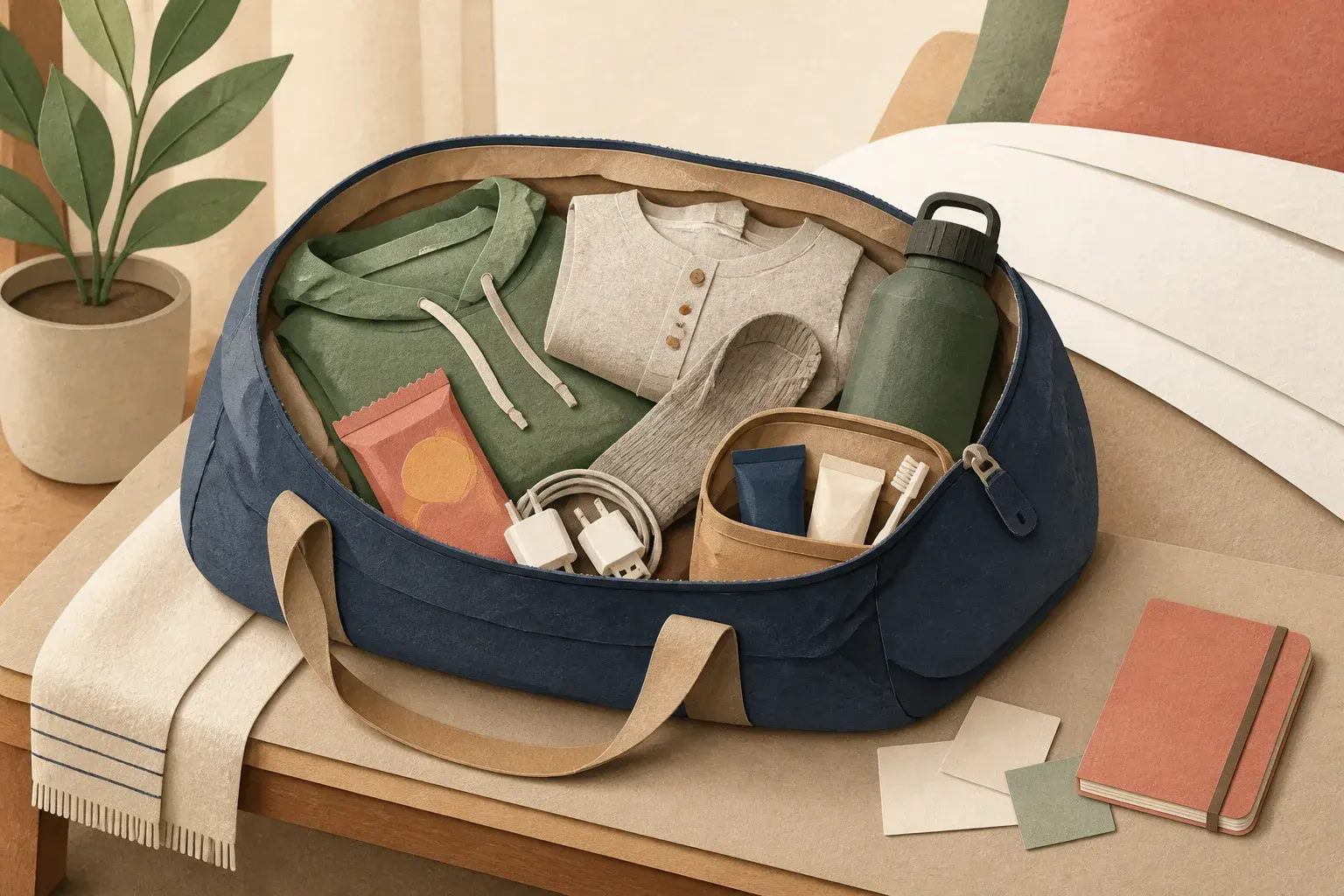
Pack for a long, changeable day
Labor may move quickly or take time. Pack for comfort and practical gaps rather than trying to predict the whole experience.
Ask your hospital or birth center what it provides and whether its current visitor, food, photography, or support-person guidance has changed.
The short packing list
Keep the bag light enough to carry and useful enough to find in a tired room.
- Phone and long charging cable or battery pack.
- Comfortable layers and spare shirt.
- Water bottle and snacks allowed by the care team.
- Identification, paperwork, and payment details as needed.
- Small toiletries and any personal medication plan.
- A written list of contacts, preferences, and questions.
Pack for your partner’s preferences
The partner’s comfort plan matters more than a generic checklist. Ask what touch, words, food, music, photos, or quiet would feel helpful, and be ready to change course.
Your job is to carry logistics while respecting consent and following the clinical team’s direction.
Pack the logistics that keep you present
The bag should reduce the number of decisions you make in the room. Use small pouches for documents, chargers, toiletries, and snacks so another adult can find something without unpacking everything. Label anything that belongs to your partner separately from your own items.
Check the hospital or birth center’s current rules before relying on a generic list. Some places provide supplies, restrict food, limit visitors, or have different documentation requirements. Local instructions take priority over a blog checklist.
Add one page with phone numbers, transport details, questions, and the preferences your partner wants remembered. The page is a prompt, not a script. It should help you listen and communicate rather than make the laboring person defend a plan.
Plan what happens after the bag is used. Keep the charger accessible, place paperwork somewhere safe, and arrange a simple way to get dirty clothes and empty packaging home. Small resets help the first hours after birth feel less cluttered.
- Use pouches for documents and chargers.
- Confirm current facility guidance.
- Pack the partner’s requested comfort items first.
- Keep transport and contact details on paper.
- Plan a simple reset for the trip home.
Add a leaving-the-house checklist
The bag is only one part of labor-day readiness. Keep a short leaving list for phones, chargers, documents, keys, water, the partner’s requested items, and the transport plan. Put it somewhere visible rather than trusting the person in labor to remember it.
Plan where the bag will live after arrival and who can retrieve anything left in the car. A small organizational choice can reduce interruptions when the care team is speaking or the recovering parent needs attention.
Do not pack the bag as a substitute for asking about current facility rules. Local policy, medical needs, and the partner’s preferences are more important than a universal list.
- Keep a visible leaving checklist.
- Put keys and documents in one place.
- Plan retrieval from the car.
- Confirm facility rules close to the date.
- Let partner preferences lead optional items.
Prepare the return trip too
Put the car-seat plan, home address, route, and a simple first meal in the same note as the bag list. The trip home is another transition, and carrying those details lets the recovering parent focus on recovery.
- Confirm the transport plan.
- Save the home route.
- Arrange the first meal before discharge.
QUICK ANSWERS
Questions new dads ask
What should dad bring to the hospital for labor?
Bring practical clothing, chargers, snacks if allowed, identification or paperwork, toiletries, and the items your partner specifically requested. Confirm local hospital guidance.
Do dads need their own hospital bag?
A small personal bag is useful because it keeps chargers, layers, food, and documents together without taking over the birth bag.
SOURCES
Read the primary guidance
Health and safety notes are summaries for general education. Follow your own care team’s advice.
Edited by the newdadatlas editorial desk. We write for general education and link to primary guidance; when a question is personal, urgent, or medical, contact a qualified professional.