
The short version
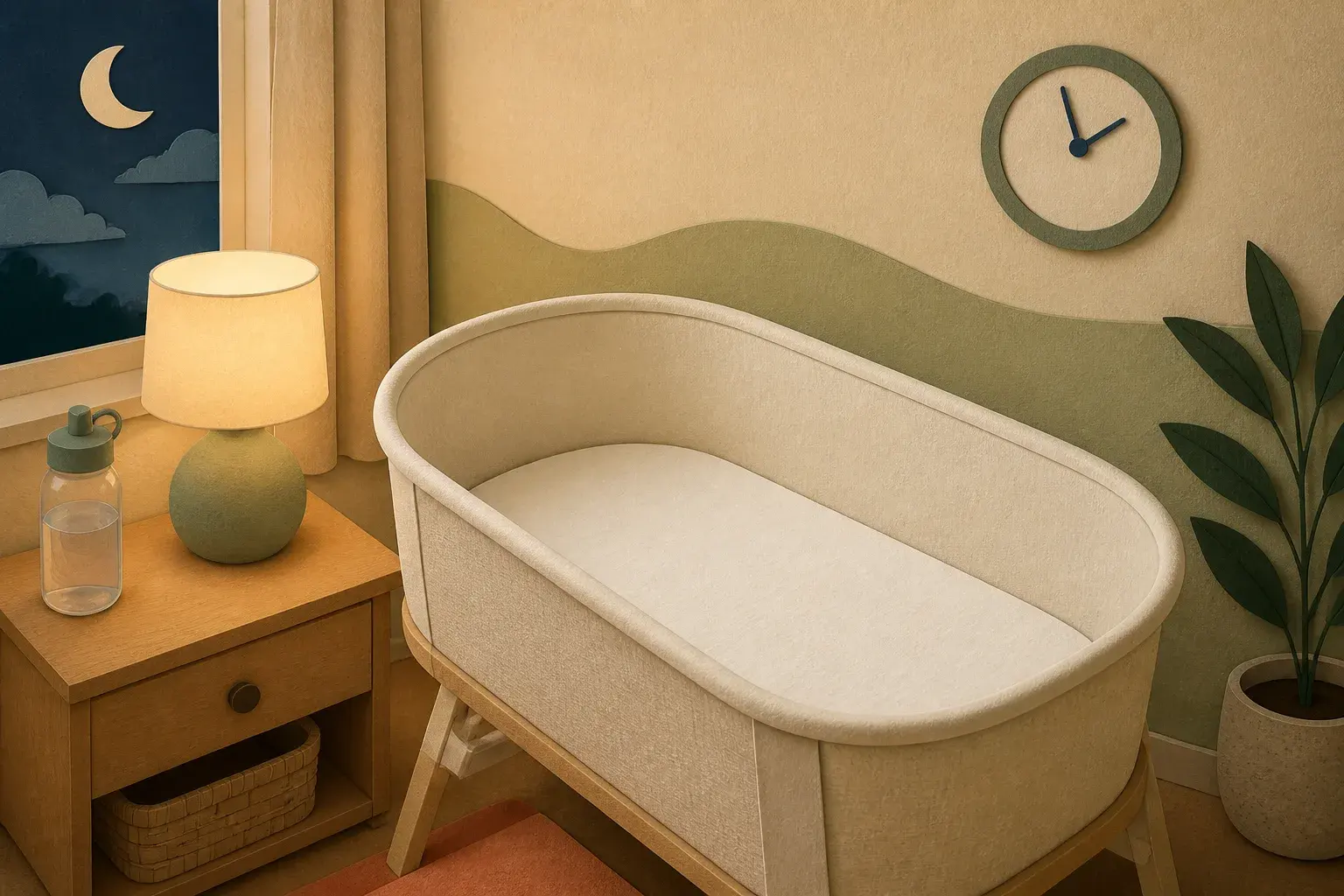
For healthy infants, the AAP recommends placing a baby on their back for every sleep, on a firm, flat, non-inclined sleep surface, with no loose bedding or soft objects in the sleep area. Room-sharing without bed-sharing is recommended.
This is an educational summary, not a replacement for your pediatrician’s advice or the complete AAP guidance.
Make the safer choice easier at 2 a.m.
Keep the bassinet or crib close to the adult sleep space, place a fitted sheet on the approved sleep surface, and keep blankets, pillows, toys, and other soft items out of the sleep area.
If you are dangerously sleepy while holding the baby, call for another adult. A sofa or armchair is not a safe place for a sleeping baby.
A handoff dads can use
Before the next adult takes over, say what happened: last feed, diaper, settling attempt, and anything the care team asked you to observe. A short factual handoff prevents guesswork and keeps the routine consistent.
Make the safe setup the easiest setup
A safe sleep routine should be visible and repeatable before anyone is exhausted. Keep the approved sleep space close to the adult sleep area, use the fitted sheet intended for that surface, and store blankets, pillows, toys, and other soft items away from the sleep space.
The person doing the 2 a.m. reset should not have to make a complicated decision. Agree in advance where the baby goes after a feed, what the handoff sounds like, and who can be called if the on-duty adult becomes dangerously sleepy.
Never use a sofa or armchair as the plan for an exhausted adult and baby. If you notice yourself nodding off while holding the baby, place the baby in the safe sleep space and wake another adult. A brief cry is safer than an unsafe sleep situation.
Follow current guidance from your own pediatrician, especially if the baby was premature, has a health condition, or has individual instructions. The general AAP summary is a starting point; personal care advice belongs with the baby’s healthcare team.
- Keep the safe sleep space ready before night begins.
- Use the approved firm, flat surface and fitted sheet.
- Keep soft objects out of the sleep area.
- Plan the tired-adult handoff in advance.
- Ask the pediatrician about individual exceptions.
Make every adult use the same safe reset
Agree on one safe sleep sentence everyone can repeat: baby on the back, in the approved sleep space, with the space clear. The shared sentence matters because grandparents, visitors, and exhausted adults may all need to understand the same boundary.
Keep the sleep area ready before the evening begins and remove decorative items from it rather than moving them around during a tired feed. A clear space is easier to check at a glance.
If a product, position, or routine seems to solve a sleep problem, bring it to the pediatrician rather than relying on a social post or a retailer description. Individual medical needs belong with the baby’s clinician.
- Use one shared safe-sleep sentence.
- Prepare the space before the night.
- Keep soft items out rather than nearby.
- Teach visitors the same boundary.
- Bring product and position questions to the pediatrician.
Teach the setup before visitors arrive
Show every regular caregiver where the approved sleep space is and what should be removed from it. A shared setup makes it easier to notice when a tired adult has placed something in the space temporarily.
- Show the setup in daylight.
- Keep the rule visible for helpers.
- Reset the space after every sleep.
QUICK ANSWERS
Questions new dads ask
Can a newborn sleep on their side?
AAP guidance says to place babies on their backs for every sleep. Ask your pediatrician about any condition that changes your baby’s individual plan.
Can a baby sleep in a car seat at home?
Follow the product and care guidance. Sitting devices are not recommended as routine sleep spaces; move a sleeping baby to a safe, firm, flat sleep surface as appropriate.
SOURCES
Read the primary guidance
Health and safety notes are summaries for general education. Follow your own care team’s advice.
Edited by the newdadatlas editorial desk. We write for general education and link to primary guidance; when a question is personal, urgent, or medical, contact a qualified professional.